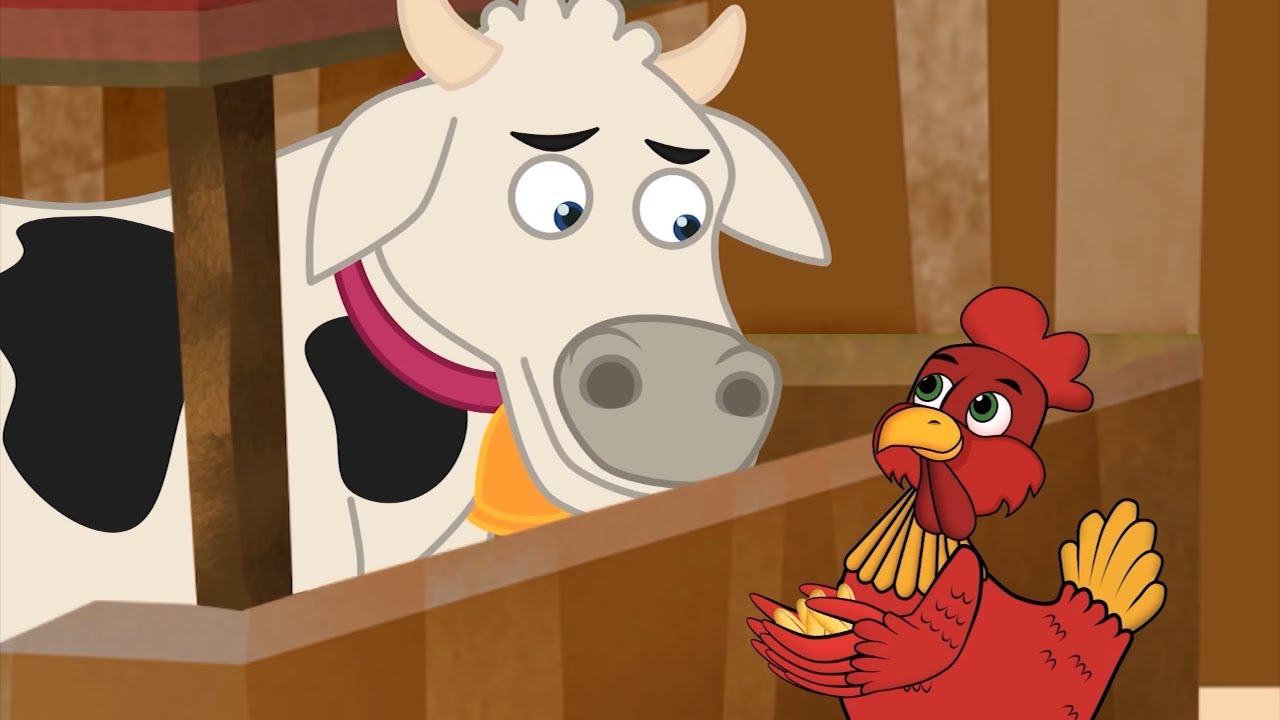
Learn German with Stories | Die kleine rote Henne & Goldlöckchen (A2-B1)
Learn German through two classic fairy tales: "The Little Red Hen" and "Goldilocks and the Three Bears". Perfect for building vocabulary, improving listening skills, and understanding narrative grammar. Tap any German word to see its meaning, grammar explanation, and the full sentence with translation!
What You'll Learn
- Storytelling and narrative past tenses (Präteritum / Perfekt)
- Everyday farm and household vocabulary
- Expressions of refusal, refusal, and determination
- Dialogue and reported speech patterns
- Listening practice with authentic German fairy tales
📖 How To Study With This Lesson
- Press Play: Click the ▶ Play button when you are ready to start the video (it does not auto-play).
- Read along: The active sentence highlights in gold while the video plays.
- Tap any German word: The video pauses automatically and a card shows the word meaning + grammar + the full sentence with translation. Close it and the video resumes exactly where it stopped.
- Repeat out loud: Use the Restart button to replay the scene and improve your pronunciation.
📝 Story Summary
🇩🇪 Deutsch
Dieses Video enthält zwei klassische deutsche Märchen. Zuerst „Die kleine rote Henne": Auf einem Bauernhof finden die Tiere eines Tages nichts zu essen. Die kleine rote Henne beschließt, in die Felder zu gehen und nach etwas Essbarem zu suchen. Sie bittet die Kuh, das Schwein, den Hund und die Ente um Hilfe, aber alle lehnen ab, weil es zu heiß ist. Also geht sie allein. Sie findet Weizenkörner, pflanzt sie ein, jätet das Unkraut, erntet den Weizen und mahlt das Mehl – immer allein, weil niemand helfen will. Als sie schließlich das Brot backt und es fertig ist, kommen alle Tiere plötzlich angelaufen. Sie sagt: „Ich habe alles alleine gemacht, also esse ich es auch alleine!" Aber sie teilt am Ende doch, weil ihre Freunde versprechen, von nun an immer zu helfen.
Dann folgt „Goldlöckchen und die drei Bären": Ein kleines Mädchen mit goldenem Haar – deshalb „Goldlöckchen" genannt – geht trotz der Warnung ihrer Mutter in den Wald. Dort findet sie das Haus der Bärenfamilie, probiert deren Haferbrei, setzt sich auf die Stühle und schläft schließlich im Bett des kleinen Bären ein. Als die Bären zurückkommen, erschrickt sie sehr und läuft weg. Ihre Eltern finden sie im Wald, und sie verspricht, nie wieder ohne Erlaubnis wegzulaufen.
🇬🇧 English
This video contains two classic German fairy tales. First, "The Little Red Hen": On a farm, the animals find nothing to eat one day. The little red hen decides to go to the fields to look for something edible. She asks the cow, the pig, the dog, and the duck for help, but they all refuse because it's too hot. So she goes alone. She finds wheat grains, plants them, weeds the field, harvests the wheat, and grinds the flour – always alone, because nobody wants to help. When she finally bakes the bread and it's ready, all the animals suddenly come running. She says: "I did everything alone, so I'll eat it alone too!" But in the end, she shares it because her friends promise to always help from now on.
Then follows "Goldilocks and the Three Bears": A little girl with golden hair – called "Goldilocks" because of it – goes into the forest despite her mother's warning. There she finds the bear family's house, tastes their porridge, sits on their chairs, and finally falls asleep in the little bear's bed. When the bears return, she gets very frightened and runs away. Her parents find her in the forest, and she promises never to run away without permission again.
German Vocabulary
| German | English | Explanation |
|---|---|---|
| der Bauernhof | farm | Compound: Bauer (farmer) + Hof (yard) |
| die Henne | hen | Female chicken |
| das Weizenkorn | wheat grain | Weizen (wheat) + Korn (grain) |
| einpflanzen | to plant | Separable verb: ein + pflanzen |
| das Unkraut | weed | Un- (bad) + Kraut (herb) |
| ernten | to harvest | Regular verb |
| das Mehl | flour | Ground grain |
| der Haferbrei | porridge | Hafer (oats) + Brei (porridge) |
| die Schale | bowl | Also means "shell" or "peel" |
| der Stuhl | chair | Furniture |
| das Bett | bed | Furniture |
| der Bär | bear | Large mammal |
| goldlöckchen | Goldilocks | Gold (gold) + Löckchen (little curl) |
| der Wald | forest | Woods |
| gehorsam | obedient | Adjective |
Grammar Notes
📌 Narrative Past – Präteritum vs. Perfekt
"The animals found themselves without anything to eat one day."
Rule: In written storytelling, the Präteritum (simple past) is used: "fanden", "entschloss", "ging", "lief". In spoken German, the Perfekt is more common: "hat gefunden", "ist gegangen".
📌 Modal Verb "wollen" – Refusals
"Do you want to come to the fields with me?" – "No, it's far too hot."
Rule: "wollen" (to want) is a modal verb. In questions it asks about intention. Answers often use "Nein" + reason with "weil" or "denn".
📌 Separable Verb – "einpflanzen"
"She decided to plant the wheat grains."
Rule: Separable verbs split in main clauses: "Sie pflanzt die Körner ein." In infinitive clauses with "zu", the "zu" goes between: "einzupflanzen".
📌 Subordinate Clause with "weil" – Reasons
"I can't, because it's far too hot."
Rule: "weil" (because) introduces a subordinate clause. The conjugated verb goes to the end of the clause.
📌 Comparative – "zu heiß", "zu kalt"
"This one was not too hot and not too cold."
Rule: "zu" + adjective means "too [adjective]". Common in fairy tales: "zu groß", "zu klein", "zu weich", "zu hart".
📌 Reflexive Verbs – "sich entschließen", "sich freuen"
"The little red hen decided to go to the fields."
Rule: Many German verbs are reflexive: "sich entschließen" (to decide), "sich freuen" (to be happy), "sich setzen" (to sit down). The reflexive pronoun changes with the subject.
Frequently Asked Questions
❓ Can stories help you learn German?
Yes, absolutely! Fairy tales and stories are excellent for language learning because they use clear narrative structures, repetition, and predictable patterns. They also introduce cultural references that native speakers grow up with.
❓ What level is this lesson?
This lesson is suitable for A2-B1 learners (intermediate level). The stories are narrated in clear German with common vocabulary and grammar patterns.
❓ How do I use the tap-to-define feature?
In the popup, tap any German word in the conversation paragraph. The video pauses automatically and a card opens showing the word, its English meaning, grammar explanation, AND the full sentence with translation. Close the card (✕, background click, or ESC) and the video resumes exactly where it stopped.
❓ What is the difference between Präteritum and Perfekt?
The Präteritum (simple past) is mainly used in written German – novels, fairy tales, news. The Perfekt (present perfect) is used in spoken German. In this video, you'll hear both, since stories mix narration and dialogue.
❓ Why are these stories so repetitive?
Repetition is a classic feature of fairy tales. It helps children (and language learners!) remember the story and internalize vocabulary and grammar patterns. "The Little Red Hen" repeats the same request four times: "Willst du mir helfen?" – "Nein, es ist zu heiß."